
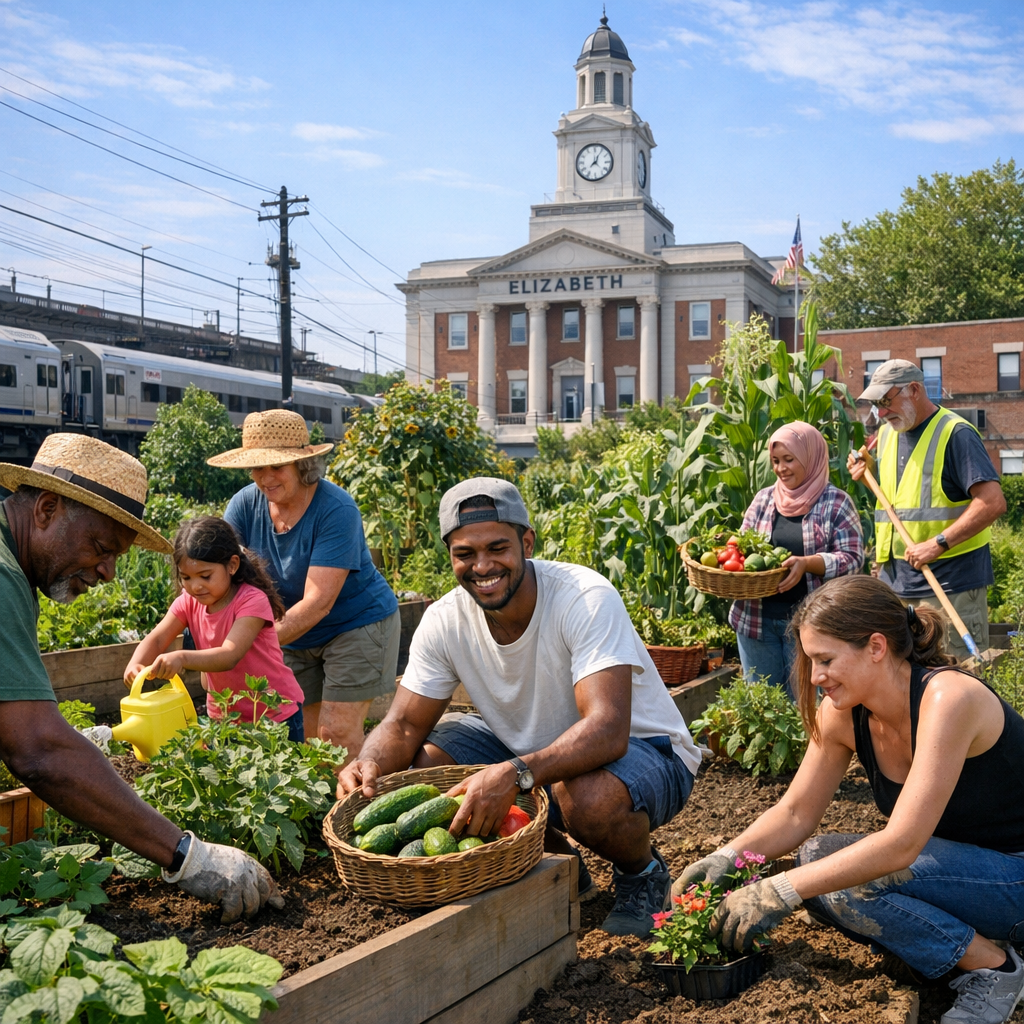
Elizabeth, New Jersey, is taking significant strides toward environmental sustainability through community-driven initiatives. Organizations like Groundwork Elizabeth are at the forefront, implementing programs that address climate resilience and promote urban agriculture.
Urban Agriculture: Cultivating Community and Sustainability
Groundwork Elizabeth’s urban agriculture programs have transformed underutilized spaces into productive gardens and farms. The Elizabeth MicroFarm, located at the Elmora Public Library, serves as a prime example. This innovative project showcases various urban farming techniques, including in-ground gardens, an apiary, and a food forest. It also features green infrastructure elements like a green roof and a rain garden, which effectively mitigated flooding during Hurricane Ida in 2021. These efforts not only provide fresh produce to the community but also offer educational opportunities for local students, engaging over 29,000 public school students in Elizabeth and neighboring areas. [Source: National Park Service]
Climate Resilience: Addressing Environmental Challenges
Recognizing the city’s vulnerability to climate-related issues such as heat islands, flooding, and poor air quality, Groundwork Elizabeth launched the Climate Safe Elizabeth program. This initiative focuses on identifying and mitigating environmental challenges, particularly in underserved neighborhoods. The program’s Climate Safe Task Force, comprising residents, community organizations, and government representatives, collaborates to develop strategies that enhance the city’s resilience to climate change. [Source: Groundwork Elizabeth]
Community Engagement: A Collective Effort
The success of these initiatives hinges on active community participation. Residents are encouraged to get involved by volunteering, attending workshops, and supporting local urban agriculture projects. By fostering a sense of ownership and responsibility, Elizabeth is building a more sustainable and resilient community for future generations.
Through these concerted efforts, Elizabeth exemplifies how urban communities can address environmental challenges and promote sustainability through collaboration and innovation.